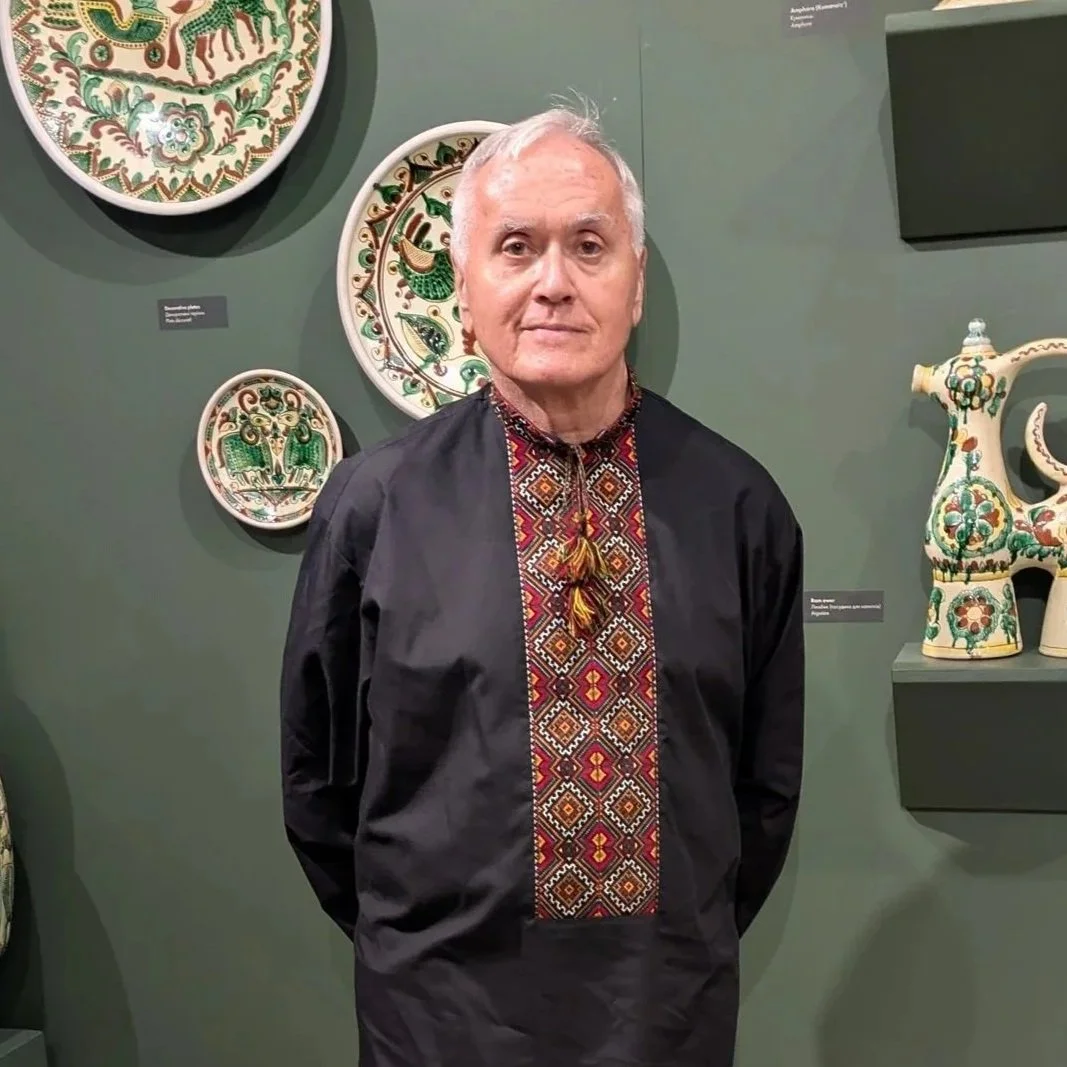
Leonard Krawchuk is a leading collector of Ukrainian folk art. He was born in Flin Flon, Manitoba. There, he participated in the choir of the Ukrainian Catholic church and its dance group. He eventually
took over dance instruction at both his and the Orthodox church. His efforts to learn more about Ukrainian culture led to a trip to Winnipeg supported by William Perepiluk. In Winnipeg, Krawchuk benefited greatly from the library and cultural resources. Krawchuk stayed in Winnipeg, where he received nursing training and secured employment. He was intensely curious about Ukrainian culture and took two trips to Soviet Ukraine and one to Ukraine when it became independent. These trips were both deeply emotional and very difficult.
During the first of these visits, Krawchuk was permitted to enter only major cities. Starting with the second, he arranged to visit the countryside, including his ancestral villages. Throughout, he benefited from people who shared his deep love for Ukrainian culture and helped him build the contacts he needed, which he has maintained.